
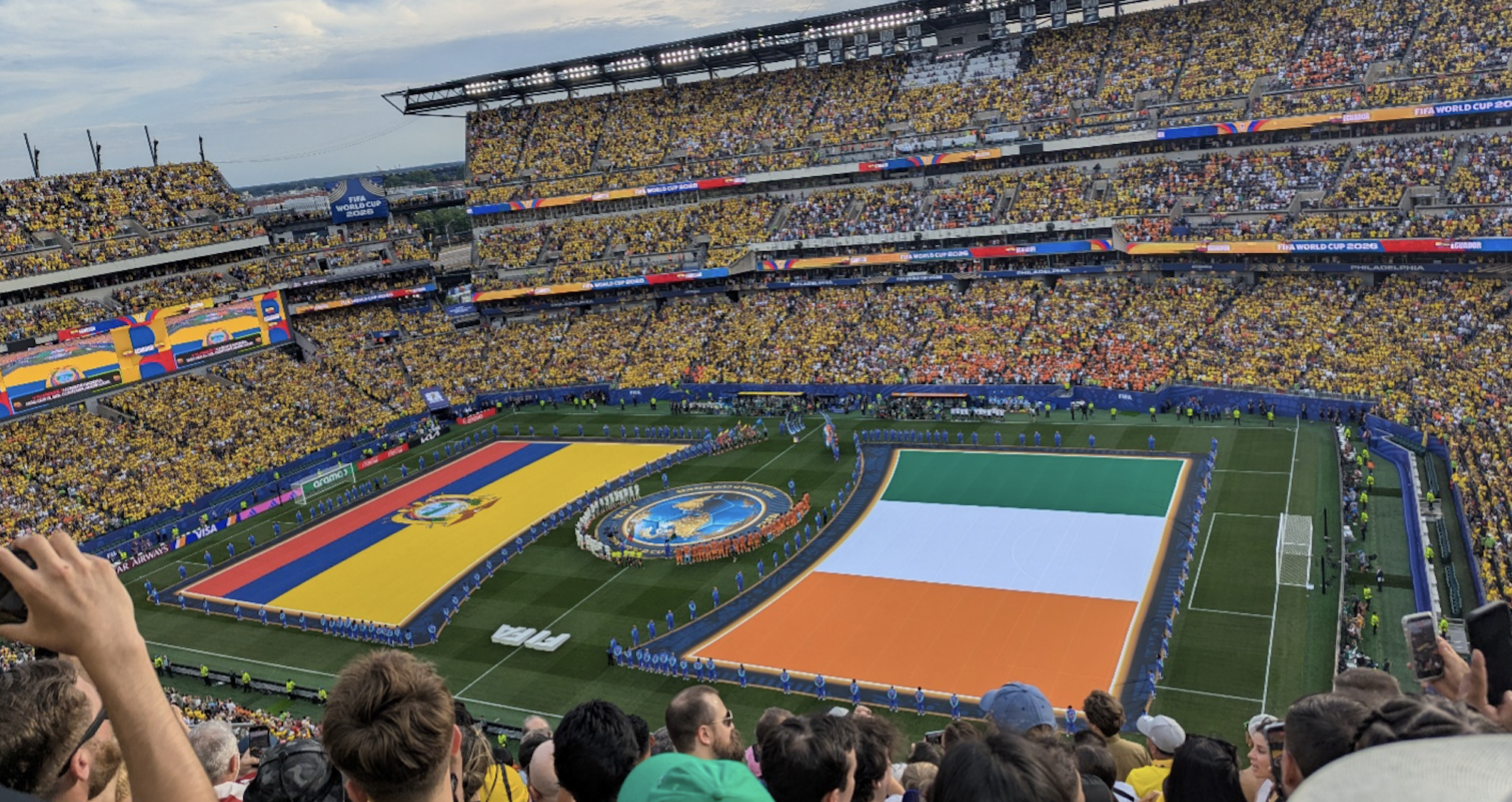
Last weekend I attended the FIFA Club World Cup match between Ivory Coast and Ecuador.
While most fans were focused on the action on the field, I couldn’t stop thinking about the economics behind an event of this scale.
The numbers are staggering.
According to FIFA’s socioeconomic impact analysis, the 2026 World Cup is expected to:
- Generate $40.9 billion in global GDP
- Create more than 800,000 jobs worldwide
- Attract approximately 6.5 million attendees
- Produce more than $80 billion in total economic output
For perspective, that’s the equivalent of creating a temporary economy that rivals the annual GDP of some small countries.
Most people think about ticket sales and merchandise.
But the real impact stretches much further.
Hotels fill up. Airlines add routes. Restaurants hire staff. Transportation networks expand. Broadcasters, advertisers, security firms, construction companies, and local businesses all participate in the economic ripple effect.
One of the most fascinating statistics is FIFA’s own revenue forecast.
The 2026 tournament is expected to become the most profitable World Cup ever, generating more than $10.9 billion in revenue, including roughly $4.2 billion from broadcasting rights and $2.8 billion from sponsorships.
Why?
Because attention has become one of the world’s most valuable assets.
When billions of people focus on a single event, businesses are willing to pay extraordinary amounts to participate.
As investors, there’s an important lesson in that.
Most people see the game.
Investors look for the cash flows behind the game.
Revenue is important.
Cash flow matters more.
The World Cup is a reminder that for a few weeks, global attention turns into a temporary economy.
Excitement captures attention.
Attention drives economic activity.
Of course, economists continue to debate how much of this activity translates into lasting economic growth for host cities. Large headline numbers do not always produce equally impressive long-term returns.
Walking out of the stadium, I was reminded that the World Cup is much more than a sporting event.
For a few weeks, it becomes a global economic engine.
Have a great week.
Read more: June 19: The $40 Billion Economics Behind the World Cup