

Every time geopolitical conflict makes headlines, the same question comes up:
“What will this do to the markets?”
History gives us a surprisingly consistent answer.
Markets often react negatively at first, but the reaction is usually short-lived.
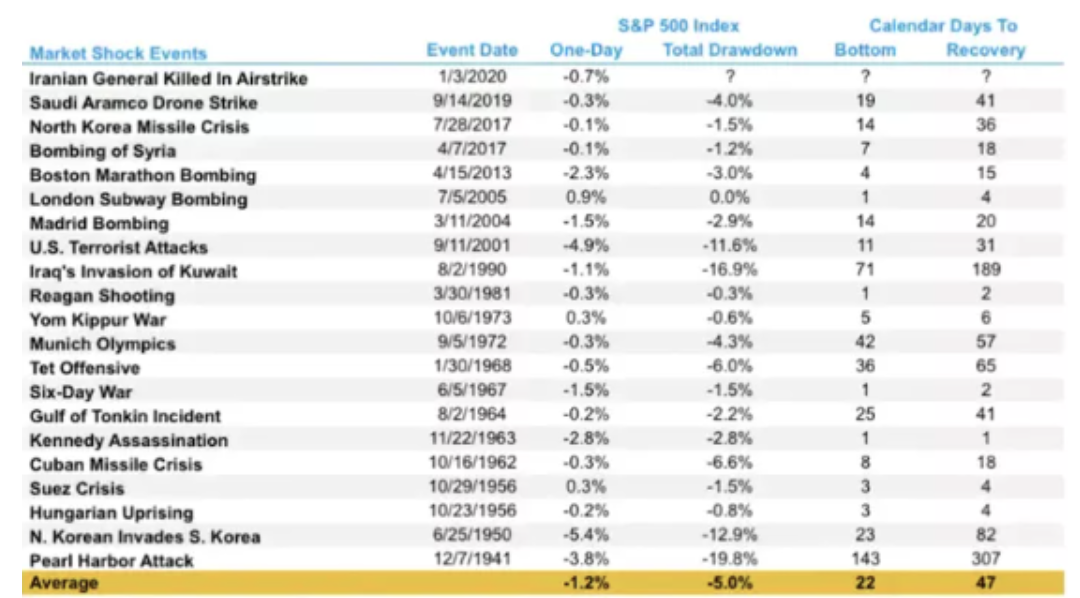
Looking at decades of geopolitical shocks, from terrorist attacks to wars, the average S&P 500 decline immediately after the event is only about 1.2%, with an average total drawdown of around 5% before recovering.
Here are a few key takeaways from historical data:
- Markets typically bottom within about 22 days
- Full recovery happens in roughly 47 days on average
- The initial reaction is usually driven by fear and headlines, not long-term fundamentals
The challenge for many investors is that public markets are marked to market every single day. Prices swing constantly based on news, sentiment, and liquidity, even when the underlying businesses haven’t changed.
Private investments work differently.
Many private market strategies, including the types of opportunities we focus on at Eppler Capital Funds, are based on contractual income streams and underlying asset value, not minute-by-minute trading prices.
That means investors are generally not experiencing the same daily volatility that public market investors see during uncertain times.
We focus heavily on secure real estate investments and income-producing strategies, which are designed to provide steady returns regardless of short-term market headlines.
In times of uncertainty, many investors find that diversification into private markets can help create a more stable investment experience.